
Origin
Origin refers to the singularity that sustains all of creation; the fundamental force, and concept of creation itself. The origin is everything that exists, and everything that exists is part of the origin.
Disclaimer: This is a work of fiction.
Fundamentals
In order to properly understand Deus Materia, and by extension the Origin. One has to first understand the fundamental ideas behind concepts, actual and causality. Concepts encapsulate fundamental ideas that describe the actual, one could for example think of a cat. However, this cat certainly does not describe all cats, it is one actual, or one example of a cat. Nonetheless, everyone would agree that there exists such a thing as a cat. This alludes to the existence of a Form, or concept as described by Plato in his theory of forms. A concept binds an actual, or imitation, and the total set of all actual, describe a concept. This relation is also shown below in the Conceptualization.
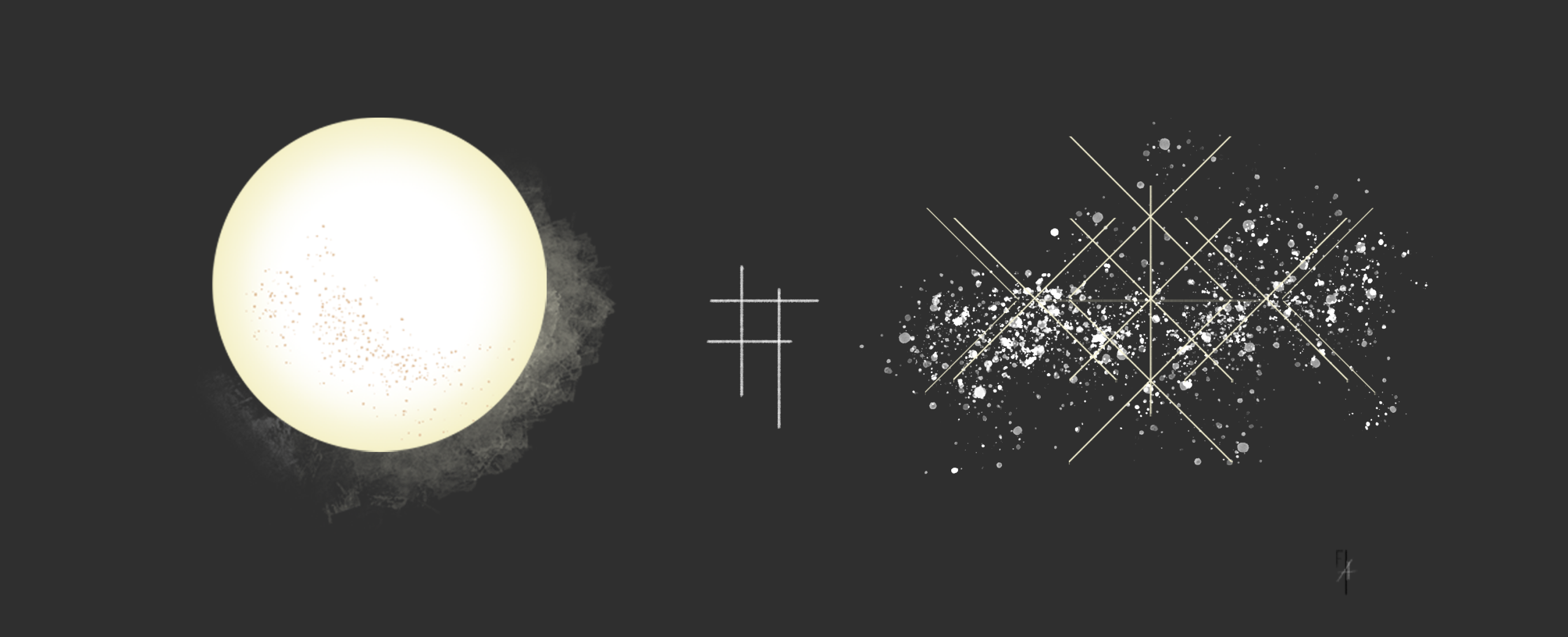
Conceptualization
Causality describes the interactions of the actual, as the actual has to adhere to the laws of physics under the agreement that cause and effect apply. Only something that is actual, can actualize the potential of another actual (i.e. change said actual’s state). It should be noted, as concepts are not actual, that they do not inherently fall under the laws of causality. Any actual has an essentially infinite set of potentials that it can change into, bound by causality, which introduces the idea of Actualization; which is for one actual to actualize the potential of another actual, through the laws of causality.
Causal Chain
We will now investigate a so-called causal chain. As noted previously, one actual is actualized by some other actual. This is precisely the agreement regarding causality, therefore, no potential is actualized without another actual leading to this actualization. This leads to a so-called causal chain, where actuals are modeled based on cause and effect. We can therefore define some arbitrary actual A and B, where B has actualized A, as shown below.

Due to the law of causality (or cause and effect), the above example correctly shows that A has been actualized by B. However, when we critically look at actual B, we notice that there is a need for another actual; C. The reason for this, is that we defined that any actual, has been actualized by another actual. Therefore, B requires for some other arbitrary preceding actual.

Clearly this argument repeats without loss of generality. As actual C now requires to have been actualized by another actual D, and actual D by another actual E, which continuous indefinitely. This is a clear result from the law of causality, as no actual can exist without another actual having actualized it. Therefore, creating a sort of infinite chain that has no starting point. If one were to argue against this property, they would argue against the very essence of modern day research, which makes the assumption that causality does hold.

Now, an infinite causal chain comes with its own set of problems, but is not necessarily an implausible result. One can imagine running across a street, now connect the ends of the street, and most certainly you could keep running indefinitely. Another possible argument is that causality does not always apply, or that the laws of causality do not apply in any capacity. Despite this, for the sake of Deus Materia, we will make the assumption that there needs to be some manner of starting point in this causal chain, and that causality does apply — after all, it otherwise begs the question of what started the chain?
First Mover
We need a stronger argument than saying there is some new actual that precedes the current causal chain, as this actual would again, need to be preceded by another actual. This naturally leads us to the conclusion, that there has to be some unactual actualizer, or first mover, introduced by Aristotle. As this unactual actualizer is not actual, it has no quantifiable form. Nevertheless, it has the capacity to actualize, satisfying the need for the first actual (actualized by the unactual actualizer) to have been actualized. This solution preserves causality, while avoiding an infinite causal chain. It should be noted, that the argument of a first mover usually comes paired with the question of a quantity of said mover(s). But to quantify the unactual – making the unactual into the actual – goes against the core principle of an unactual actualizer.

Innately the unactual actualizer cannot be quantified, and is therefore unactual. This is in-line with the previously established idea of concepts. This is indeed true, as the unactual actualizer itself is the concept of actualization, or in other words creation. At this stage, established philosophy ends, and Deus Materia begins. This concept of creation, we will refer to as the Origin.